

Overview
You expect hot water when you need it, the same way you expect electricity or running water. When you turn the handle, and halfway through your shower, you get hit with a sudden blast of cold water, something obviously isn’t quite right. Professional water heater repair can restore your hot water supply, but the right solution depends on what’s causing the shortage. In this blog post, Hoosier Drain Guys explains the most likely culprits behind your insufficient hot water supply and how to determine whether your equipment needs maintenance, repair, or replacement.
Highlights
- Hot water capacity
- Water heater problems
- Water heater recovery time
- Flushing your unit
- When to replace
Introduction
So, you have no, or very little, hot water. Do you turn the shower handle farther toward hot? Wait a few minutes and try again? Ask if someone else used all the hot water? Your investigation won’t lead to any lasting solution when the problem has nothing to do with how you’re using hot water or how much your household consumes. Your next move should be to look at what might be going wrong with the equipment, how problems affect your hot water supply, and which ones call for professional repairs.
What Determines How Much Hot Water You Have?
Your water heater can only supply so much hot water at a time. If you have a traditional tank water heater, it stores a certain amount of heated water, usually measured in gallons. As you shower or wash dishes, hot water leaves the tank, and cold water enters to replace it. The heater then has to warm that incoming water. If you’re using hot water faster than the heater can replenish it, the temperature at your faucets will eventually drop.
Two things matter here, namely how much hot water your heater can deliver before the temperature drops, and how quickly it can heat more. A larger tank generally provides a greater reserve, while a faster recovery rate means less waiting once that reserve runs low. Tankless water heaters work differently, heating water as it passes through rather than storing it. However, they also have limits on how much hot water they can produce at once, especially when several fixtures are running.
What Are Problems That Reduce Your Hot Water Supply?
Every water heater has limits. Ideally, that limit is only reached when your household’s hot water demand exceeds the system’s capacity and doesn’t interfere with your normal daily activities. When you’re running out of hot water despite using no more than usual, however, something else may be affecting your water heater’s performance.
The list of those problems is often surprisingly short, though identifying which one is responsible can be difficult without knowing what to look for.
Sediment Buildup Inside the Water Heater
Your home’s water naturally contains dissolved minerals, particularly calcium and magnesium. When water is heated, some of these minerals can separate from the water and form solid deposits. Small particles carried in through the water supply can also settle inside the heater. In a traditional tank water heater, this sediment gradually collects along the bottom of the tank.
As the layer thickens, it can interfere with the heating process. In gas water heaters, sediment forms a barrier between the burner-heated bottom of the tank and the water above it, slowing heat transfer. In electric models, mineral deposits can also accumulate on heating elements and reduce their effectiveness. The result? Longer heating times and less hot water available when you need it.
Failing Water Heater Heating Elements
Most electric tank water heaters have two heating elements, one near the top of the tank and another near the bottom. These metal components extend into the water and heat up when electricity passes through them, much like the heating element in an electric kettle. The upper element heats the water near the top of the tank first, while the lower element heats the remaining water as the tank fills with cold water.
Over time, heating elements can burn out or become damaged by mineral buildup. If the lower element fails, you may get a small amount of hot water before it turns cold because only the upper portion of the tank is being heated. A failed upper element can leave you with little or no hot water at all. When the elements are defective, a plumber can typically replace them without much difficulty.
Broken Water Heater Dip Tube
Inside a traditional tank water heater, a dip tube is a long plastic pipe connected to the cold water inlet at the top of the tank. It extends down toward the bottom, directing incoming cold water away from the hot water collected near the top. This arrangement allows the heater to warm the incoming water while the hottest water remains available to flow out through the hot water outlet.
If the dip tube cracks or deteriorates, cold water can enter near the top of the tank instead of reaching the bottom. It then mixes with the heated water and lowers its temperature before it reaches your faucets, such that you might notice that your hot water turns lukewarm much sooner than it used to. Fortunately, a damaged dip tube can usually be replaced on its own.
Faulty Water Heater Thermostat
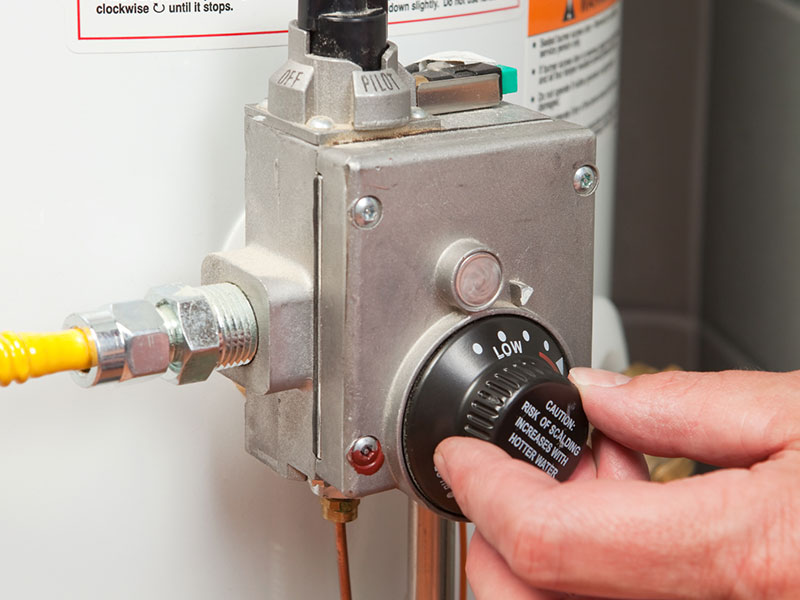
Your water heater’s thermostat controls the temperature of the water by telling the heating system when to turn on and off. On electric tank models, the thermostats are usually located behind access panels on the side of the unit, while gas models typically have a temperature control dial near the bottom. Most households should keep their water heater set to around 120°F.
When a thermostat malfunctions, it may fail to activate the heating system at the correct temperature or shut it off too soon. This produces many of the same symptoms described above, but most likely lukewarm water or a supply that runs cold too quickly.
If the temperature setting is incorrect, adjusting it according to the manufacturer’s instructions may resolve the issue. If the thermostat is defective, a plumber can test and replace it.
How Long Should It Take a Water Heater To Reheat?
Recovery time refers to how long it takes to replenish your hot water supply after you’ve used it. For a typical tank water heater, reheating a substantially depleted tank can take around 30 to 60 minutes for a gas model and one to two hours for an electric model, although actual times vary. You shouldn’t expect an empty tank’s supply to be restored instantly, but you also shouldn’t have to wait several hours for a normal amount of hot water.
This also depends on the heater’s size, heating capacity, and the temperature of the incoming cold water. Gas models generally recover faster than standard electric models, while colder incoming water takes longer to heat. If your heater suddenly takes much longer than it used to, even when your household’s habits haven’t changed, it may be struggling to heat water properly.
Can Water Heater Flushing Restore Hot Water Supply?
Remember the mineral buildup discussed earlier? Flushing a water heater is one way to remove loose sediment that’s settled at the bottom of the tank. The process involves shutting off the heater’s power or gas supply, connecting a garden hose to the drain valve near the bottom of the tank, and directing the water to a suitable drain. Water is then released through the valve, carrying sediment out with it.
Flushing can improve heating performance when sediment is contributing to the problem, although it won’t necessarily remove hardened mineral deposits or fix defective components. Many manufacturers recommend periodic flushing, often annually, but the appropriate schedule depends on water quality and the heater’s instructions. While some homeowners perform this maintenance themselves, there are risks. If you’re unfamiliar with the procedure or your heater is older, having a plumber handle the flushing is generally the safer choice.
What Are Signs That Water Heater Replacement Makes Sense?
Having an inconsistent or insufficient hot water supply doesn’t tell you whether your water heater needs to be replaced. As discussed, many of the underlying problems can be resolved with relatively straightforward repairs or maintenance.
Sometimes, however, poor performance is part of a larger pattern of deterioration that makes replacing the unit more practical than continuing to repair it.
Here are some signs that replacement may be the better option:
- Age: The water heater is approaching or exceeding its expected lifespan of 8 to 12 years.
- Leaking tank: Water is escaping from cracks or corrosion in the tank itself.
- Visible corrosion: Rust is developing on the tank or around its connections.
- Frequent repairs: Breakdowns are becoming more common and costly.
- Insufficient capacity: The water heater can no longer meet your hot water needs.
Solve Your Hot Water Problems Today
You’ve reached the end of this guide. Now it’s time to put an end to your hot water problems. Hoosier Drain Guys provides professional water heater repairs and replacements to address the issues keeping your household from enjoying a reliable hot water supply.
Contact us today at (765) 744-3822 to get your hot water back!